
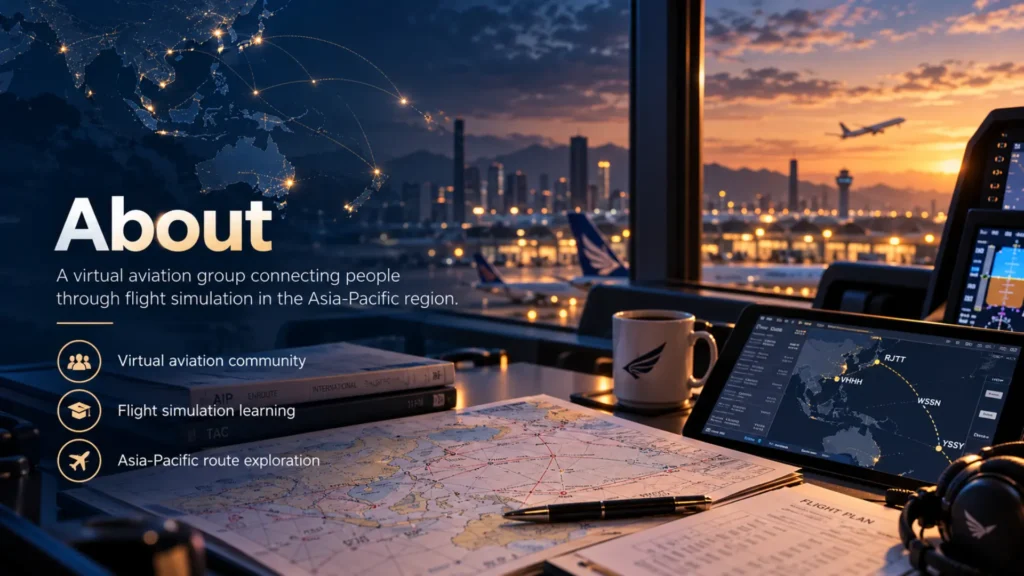
About Rallye Air Asia Pacific Group
Rallye Air Asia Pacific Group is associated with the world of virtual aviation, flight simulation, and airline-style flying activities in the Asia-Pacific region. Its historical website reflected the interests of an aviation community through flight information, pilot activity records, simulated airline operations, and aviation-related events. These elements illustrate how virtual flying communities have used online platforms to organize information and connect people with a shared interest in aviation. The subject of virtual aviation extends beyond operating simulated aircraft because it also involves understanding navigation, weather, communication, and the structure of airline operations. Each of these topics contributes to a broader appreciation of the technical and geographical factors that influence flight. The distinction between simulated and actual aviation remains important when interpreting the activities represented on the website.
Flight simulation has developed alongside advances in personal computers, graphical technology, aircraft modeling, and digital navigation systems. Earlier generations of simulation software provided relatively simple representations of aircraft and scenery, while modern platforms can model increasingly detailed cockpit environments and aircraft systems. Online flight communities have added opportunities for communication, group activities, and the exchange of technical knowledge. These developments have contributed to the growth of flight simulation as a recreational and educational interest. Within this context, the Asia-Pacific region offers a wide variety of airports, routes, landscapes, and weather conditions for aviation enthusiasts to study. Understanding those subjects helps explain the longstanding appeal of virtual airline communities.
Our Focus on Virtual Aviation
The central subject of Rallye Air Asia Pacific Group is virtual aviation and the knowledge associated with simulated flying. This includes the basic principles of aircraft operation, flight planning, navigation, airline procedures, and the use of aviation simulation software. Aircraft performance, airport geography, weather interpretation, and communication procedures are also relevant to the wider field. These subjects help explain how different stages of a flight relate to one another. They also illustrate the difference between a visually convincing simulation and a technically accurate representation of actual aviation. Informative content about these topics provides a foundation for readers who wish to better understand the aviation environment.
The Asia-Pacific region is especially relevant because it encompasses numerous aviation markets and a geographically diverse collection of airports. Flight routes may connect large urban centers, regional communities, remote islands, and destinations separated by considerable distances. The practical implications of these routes vary according to terrain, weather, airspace, and aircraft capabilities. Studying them offers insight into the role that geographical conditions play in aviation planning. Virtual flight environments can recreate selected aspects of these conditions for educational or recreational exploration. Their usefulness depends on the accuracy of the simulated aircraft, environmental data, and operating procedures.
Historical Background and Community Connections
The historical Rallye Air Asia Pacific Group website included features commonly found on virtual airline community platforms. These included sections devoted to pilot activity, flight information, member participation, and aviation-related announcements. Such features were widely used by virtual flying organizations to keep records and communicate with participating pilots. Online aviation networks also provided a way for enthusiasts in different locations to share simulated airspace and practice standardized communication. The website’s archived presentation reflects this period of community-oriented flight simulation. It offers a view of how aviation interests were organized and shared through online platforms.
Historical material must be interpreted within its original time period. An archived flight schedule does not necessarily represent a current operation, and a past event announcement does not establish that the event continues today. Similarly, a logo displayed on an earlier website does not independently confirm a present-day partnership or endorsement. Recognizing these distinctions preserves the historical value of the material without creating inaccurate impressions. It also allows readers to distinguish between general aviation knowledge and information specific to the original community. This approach supports a clearer understanding of the website’s historical identity.
A Commitment to Informative Aviation Content
Aviation is a technical field in which accuracy and context are essential. Information about flight procedures, navigation systems, airspace, and aircraft operations should be presented with attention to established terminology and verifiable principles. At the same time, flight simulation must be clearly distinguished from licensed aviation operations and approved professional training. Computer-based simulations can illustrate many operational concepts, but they do not automatically meet the standards required for formal flight training. Differences between software platforms, aircraft models, and navigation databases can also affect the accuracy of a simulated flight. A responsible informational approach acknowledges these limitations rather than treating every simulation as an exact recreation of reality.
The subject matter of Rallye Air Asia Pacific Group provides opportunities to explore aviation from several perspectives, including technology, geography, history, and community participation. These perspectives explain why simulated flying remains relevant to enthusiasts with different levels of experience. Some readers may be interested in the technical details of flight management systems, while others may prefer information about regional airports and aviation procedures. The broader purpose of presenting these subjects is to support an accurate understanding of the aviation activities represented by the website. Historical community information and established aviation concepts can coexist when each is described in its proper context. Together, they provide an informative picture of virtual aviation and its connection to the wider aviation world.